

News & Insights
In-depth articles, product stories, and thought leadership from Solargy.
How a Commercial Patio Umbrella Canopy Is Cut, Sewn and Prepared
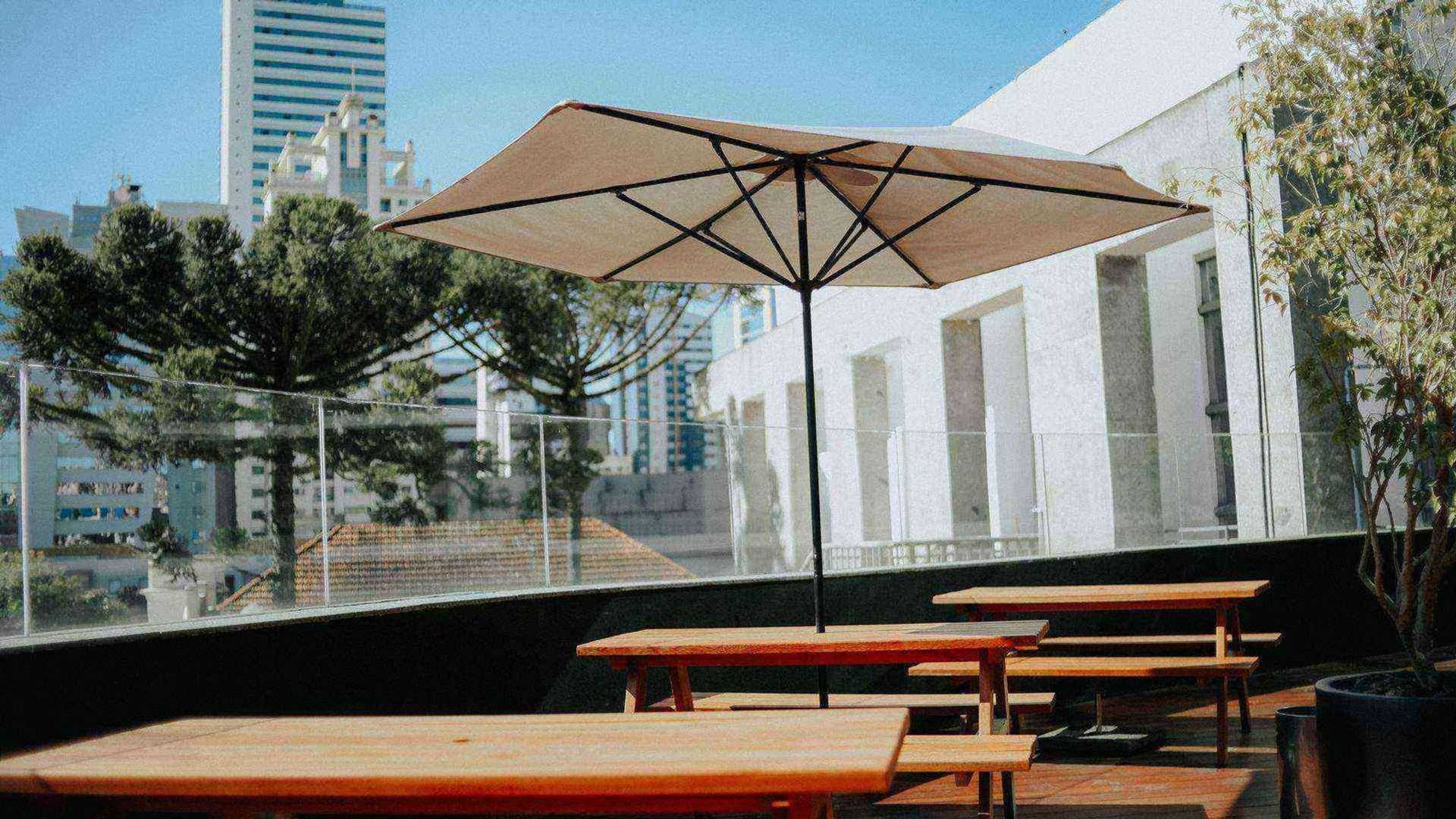
The canopy is the largest visible surface of a patio umbrella, but its role is both visual and functional. It defines the shade area, carries the project's color language and protects the people and equipment beneath it. In commercial environments, it must also tolerate frequent opening, closing and exposure to changing weather.
Producing a well-fitted canopy requires coordinated work from fabric inspection through final installation. Each stage affects how the fabric sits on the frame and how the umbrella presents itself in a finished space.
1. Reviewing fabric for the project
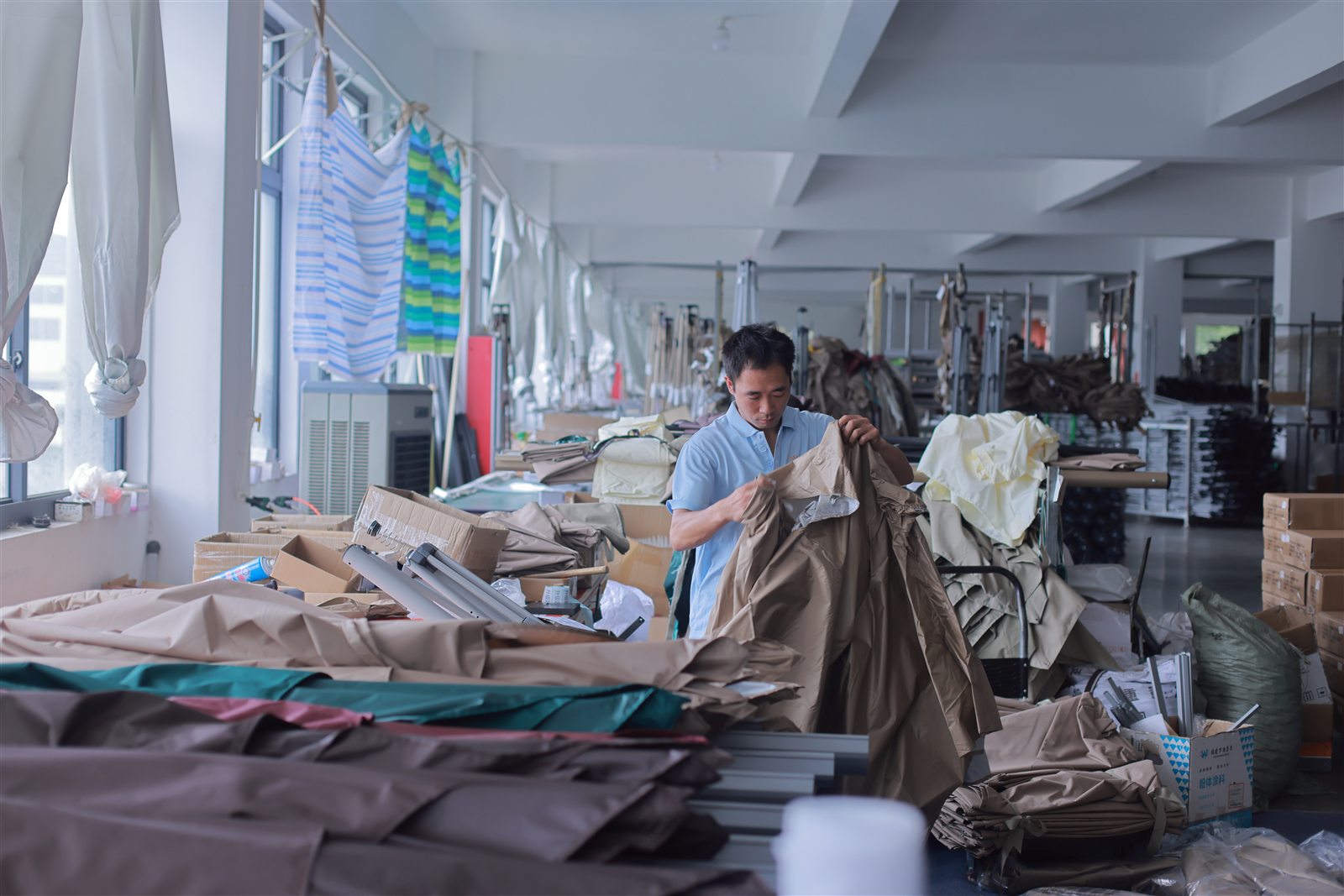
Fabric selection begins with the intended environment. Color, weight, hand feel and outdoor performance all need to match the application. A restaurant terrace may prioritize brand color and clean presentation. A poolside or coastal installation may place greater emphasis on moisture, sunlight and routine cleaning.
Before cutting, fabric is checked for visible inconsistencies and organized by production batch. This helps maintain a uniform appearance when multiple umbrellas are installed together.
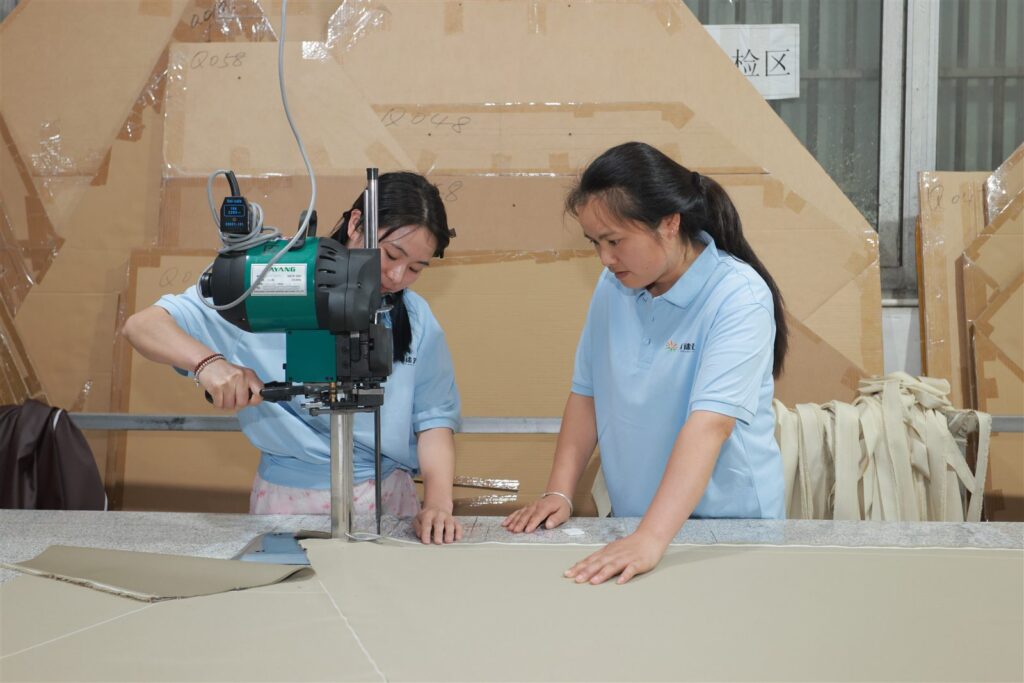
2. Pattern planning and accurate cutting
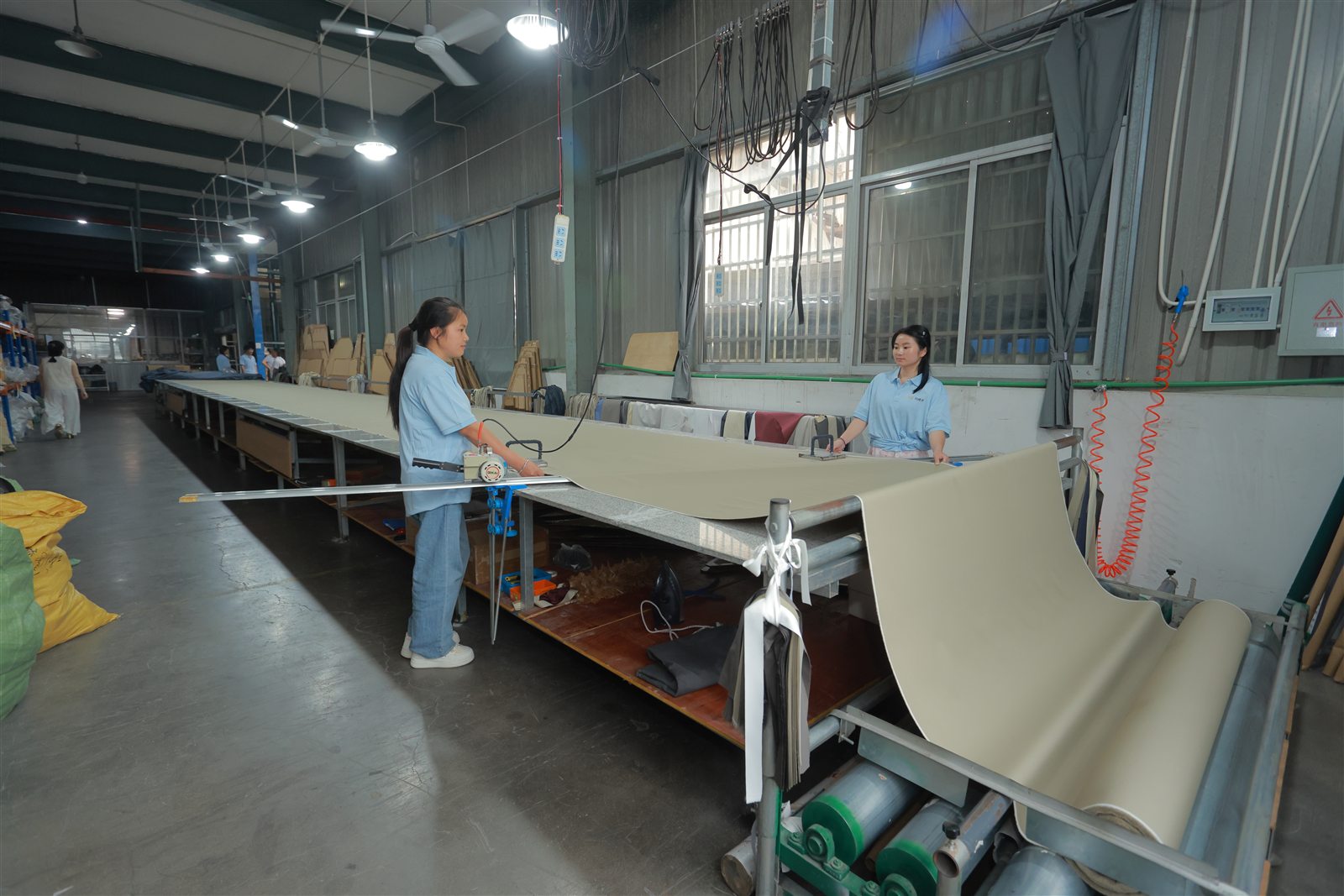
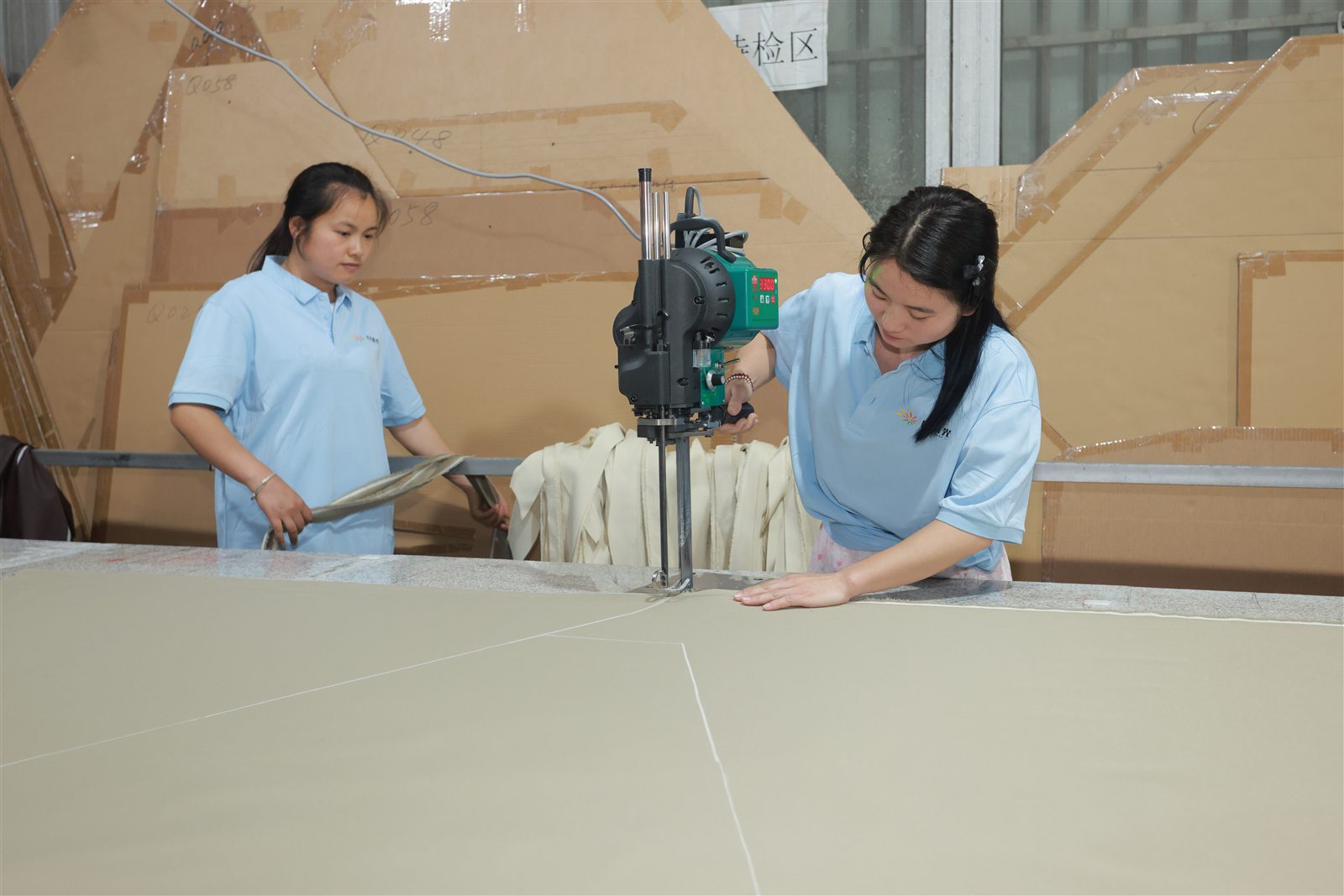
An umbrella canopy is assembled from shaped panels. Their geometry determines how the finished cover follows the ribs and how evenly tension is distributed. Accurate patterns help avoid loose areas, uneven seams or excessive force at attachment points.
Cutting plans can also improve material utilization while keeping panel direction consistent. For larger commercial orders, repeatable cutting is important because customers expect every unit in the same location to present the same profile.
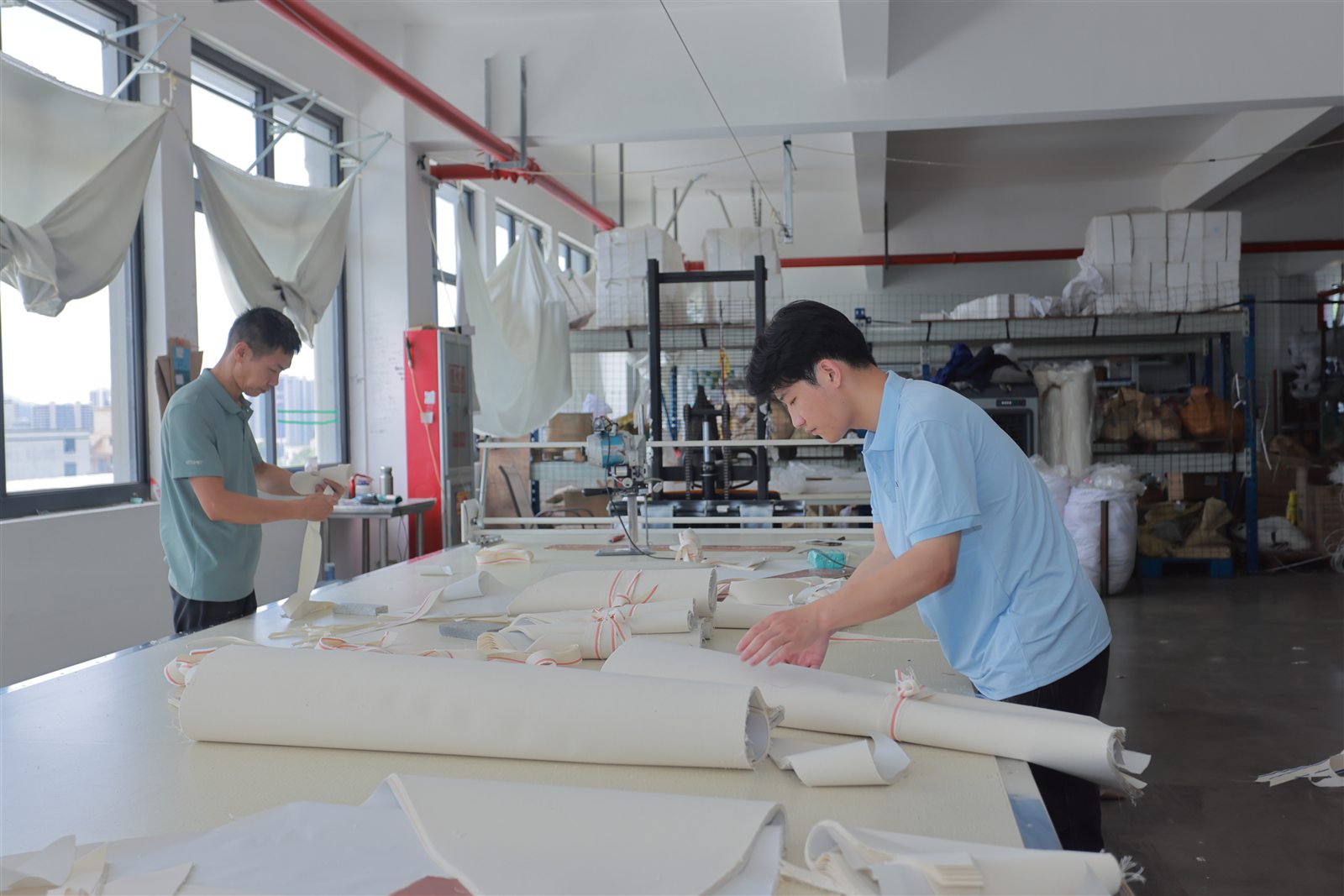
3. Sewing with reinforcement where it matters
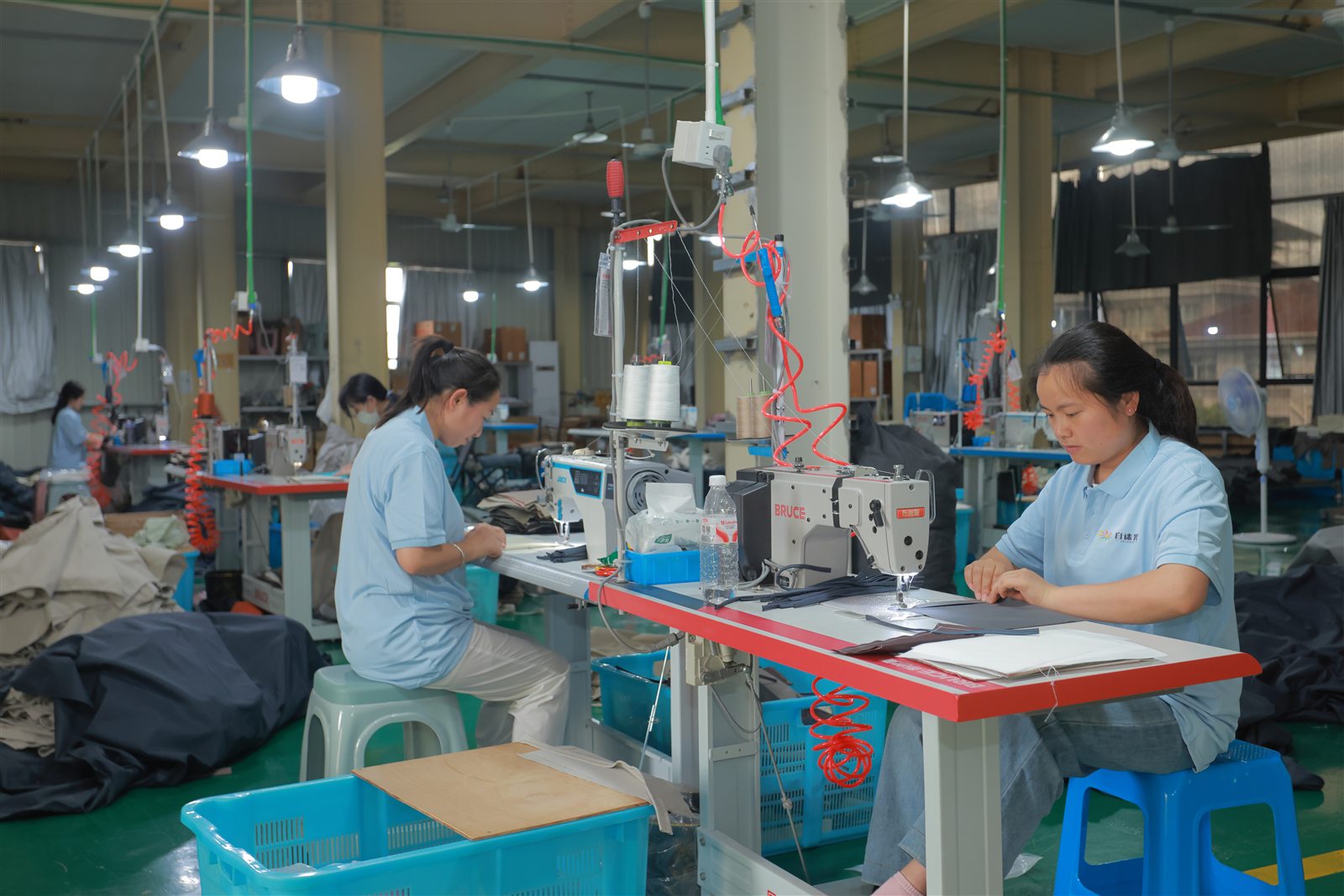
Panel seams create the canopy shape, but stress is concentrated at corners, rib pockets, vents and other connection areas. These positions require careful stitching and appropriate reinforcement. The objective is not simply to add more stitches; it is to place reinforcement where operating loads are transferred to the fabric.
Experienced sewing teams also monitor seam alignment and edge finishing. Clean, consistent work contributes to both appearance and service life, particularly when the canopy is viewed at close range in hospitality and residential projects.
4. Details for smart solar umbrellas
A solar umbrella may include lighting, a fan, controls or other electrical components beneath the canopy. That means the fabric design must coordinate with cable paths, mounting positions and access for assembly or maintenance.
Openings and attachment details should be planned rather than added as an afterthought. A coordinated design keeps the underside organized and helps the finished product retain the clean appearance expected from premium outdoor furniture.
5. Fitting and checking the final canopy
After sewing, the canopy is fitted to the frame and opened fully. Technicians review seam direction, corner position, vent alignment and overall tension. This step is where the relationship between textile work and frame accuracy becomes visible.
A well-prepared canopy should look balanced, open without abnormal pulling and maintain a clean silhouette. If adjustment is needed, it is better to identify it during factory inspection than after installation at the project site.
Built for projects, not only product photos
Commercial buyers often compare umbrellas by color and size, but canopy construction deserves equal attention. Consistent cutting, reinforced sewing and careful fitting help an installation look professional across many units and support more reliable daily use.
Solargy can coordinate canopy dimensions, colors, logo applications and functional details with the frame and smart-energy system. This integrated approach is particularly valuable for hospitality groups, distributors and OEM/ODM customers that need repeatable results rather than a one-off sample.
Related Articles
 Factory
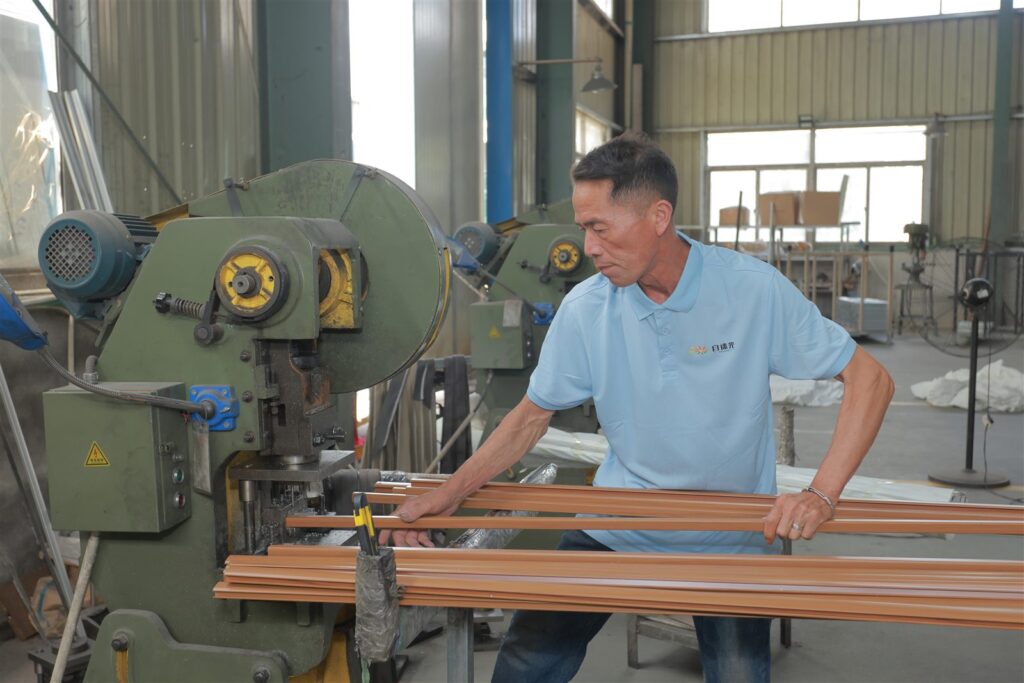
From Aluminum Profile to Load-Bearing Frame: How Commercial Umbrella Structures Are Made
See how commercial patio umbrella structures go from aluminum profile to load-bearing frame, and what makes each stage reliable.
Read More Applications
From Daylight Shade to Evening Ambience: Extending the Life of a Patio
Learn how solar patio umbrellas extend patio use from daytime shade to evening ambience with built-in lighting for outdoor hospitality spaces.
Read More Applications
How to Install a Cantilever Solar Umbrella for a Stable, Guest-Ready Patio
Learn how to install a cantilever solar umbrella for a stable, guest-ready patio, with practical setup guidance for reliable outdoor use.
Read More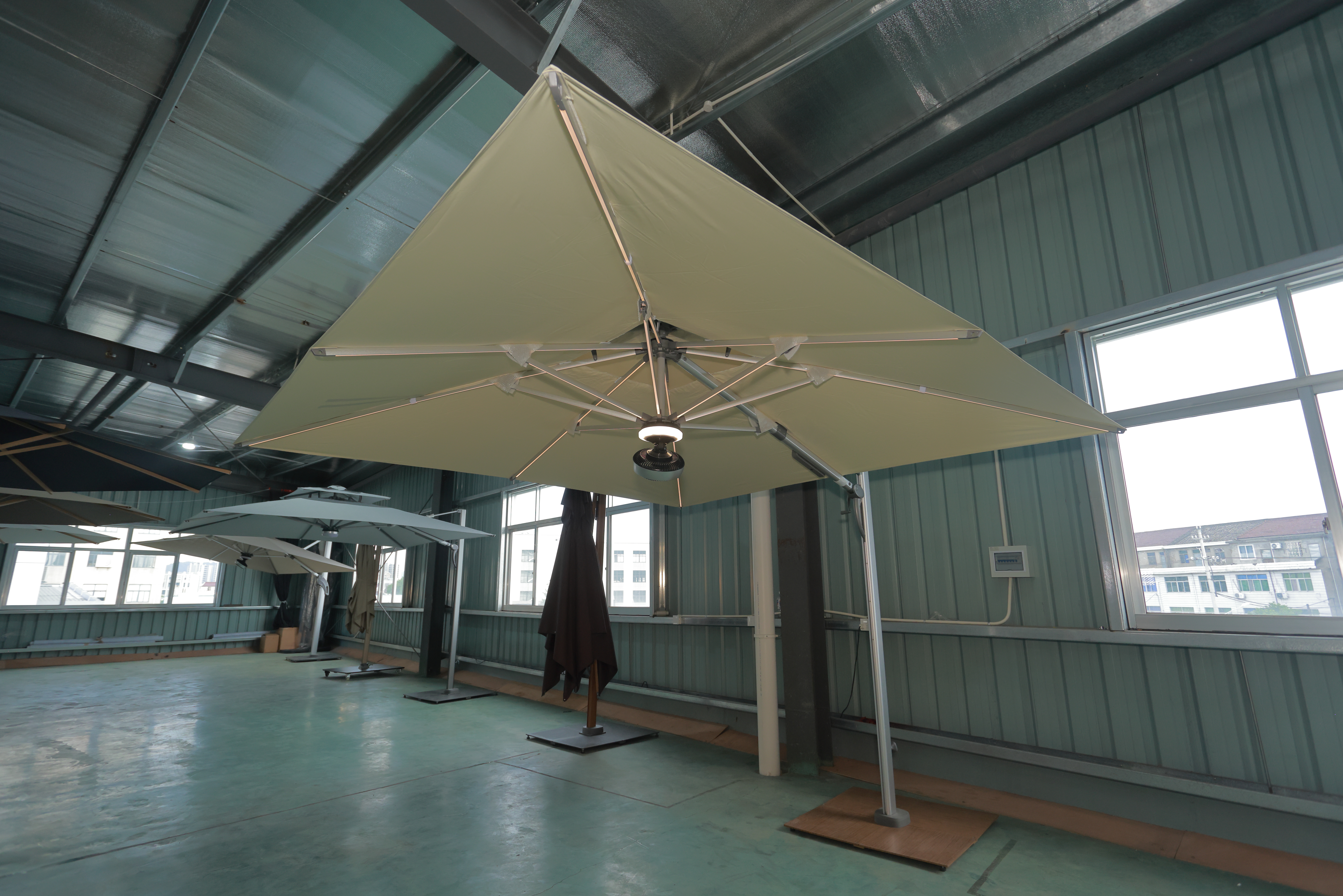 Solar Energy
20W vs 40W Solar Umbrellas: How to Choose the Right Power Configuration
Compare 20W and 40W solar umbrella systems by energy demand, battery capacity and nightly runtime to choose the right setup for each outdoor application.
Read More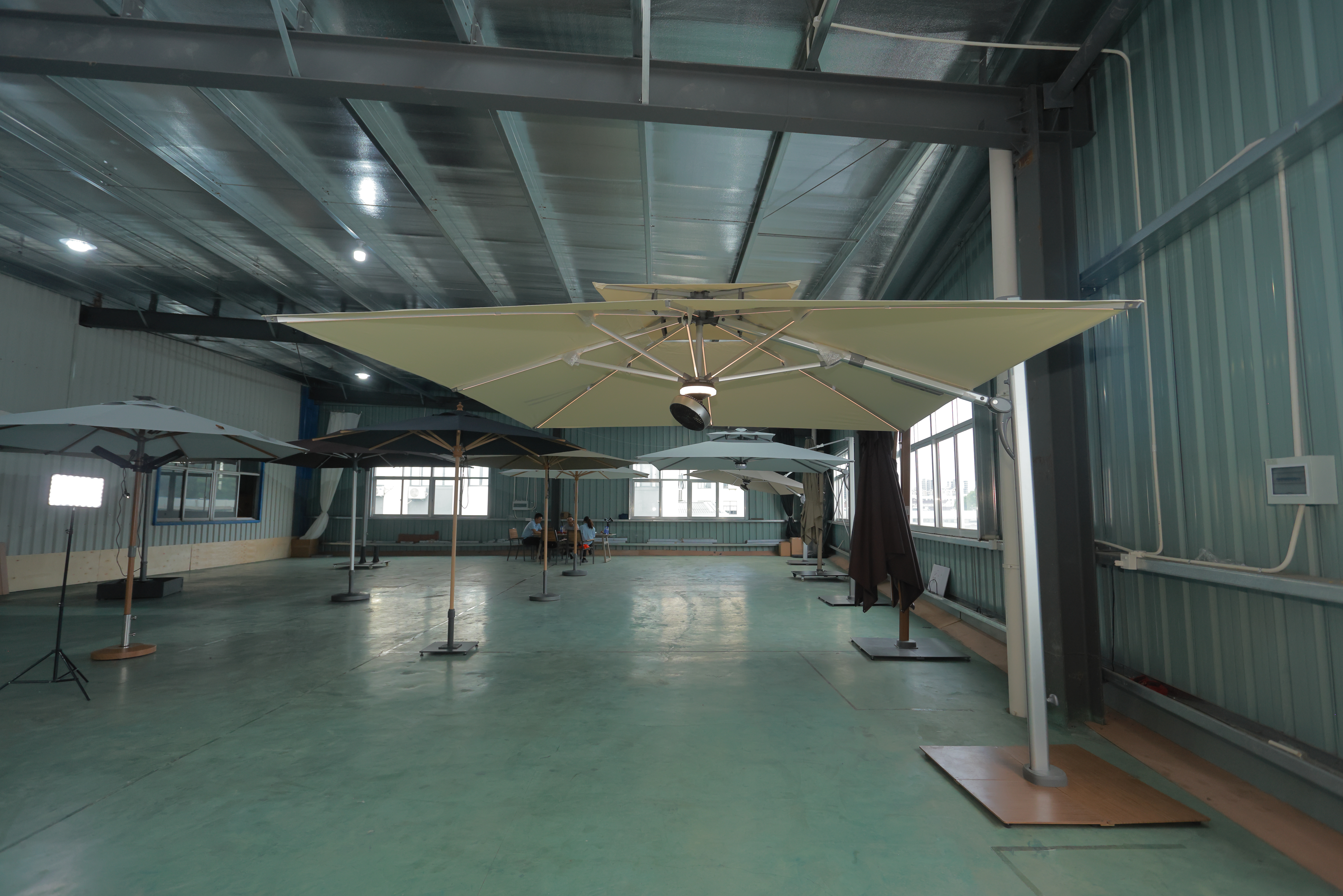 Applications
Five Smart Features That Improve Outdoor Hospitality Spaces
Explore five smart features that improve outdoor hospitality spaces, from Bluetooth umbrellas to fan and LED integration, designed for guest comfort.
Read More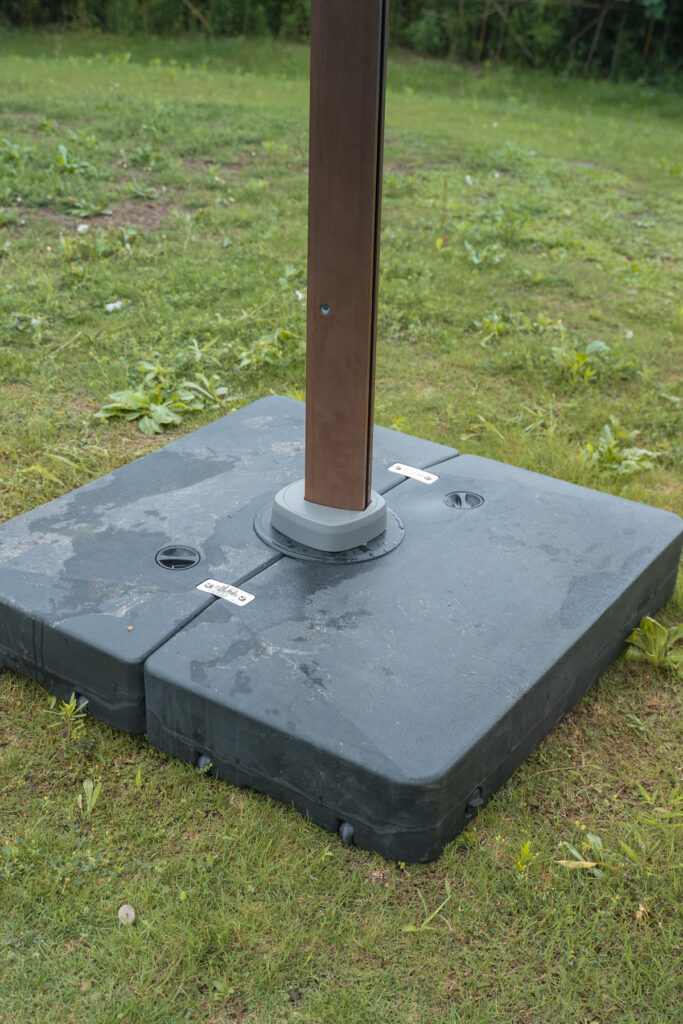 Applications
Portable Stability: How a Water-Fillable Base Supports Cantilever Solar Umbrellas
See how Solargy's water-fillable base adds on-site ballast to cantilever solar umbrellas, making delivery, positioning and seasonal storage easier.
Read More