


News & Insights
In-depth articles, product stories, and thought leadership from Solargy.
Why Assembly Accuracy Matters in Cantilever Patio Umbrellas
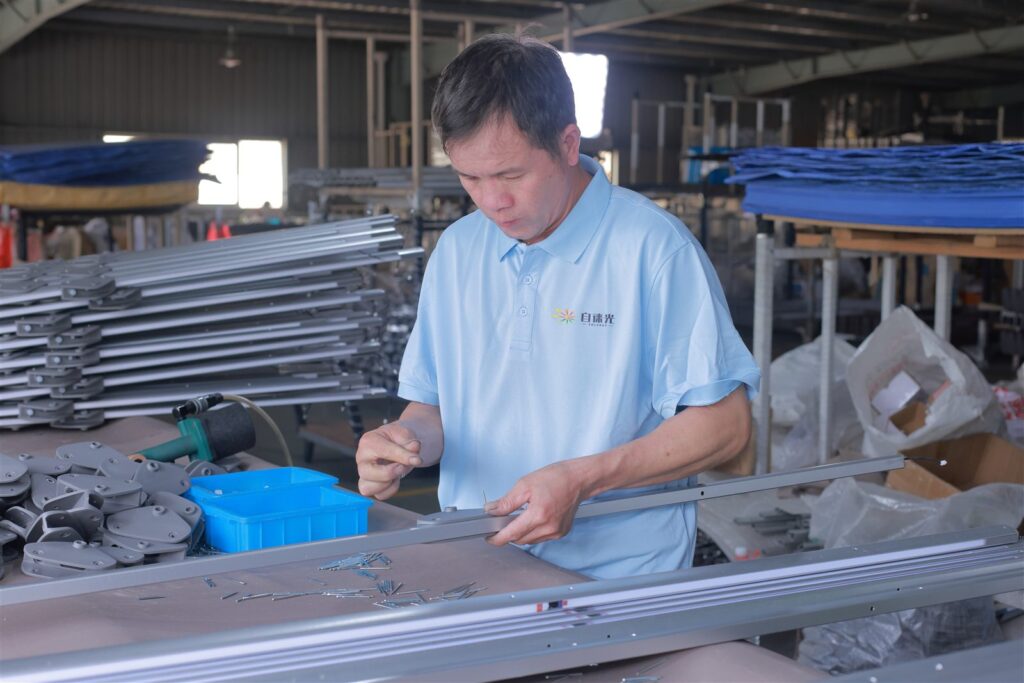
Cantilever umbrellas create wide, unobstructed shade by supporting the canopy from the side. The layout is convenient for dining tables, lounge seating and circulation areas, but it also means that the frame must manage an offset load. Assembly accuracy therefore has a direct effect on operation, appearance and long-term reliability.
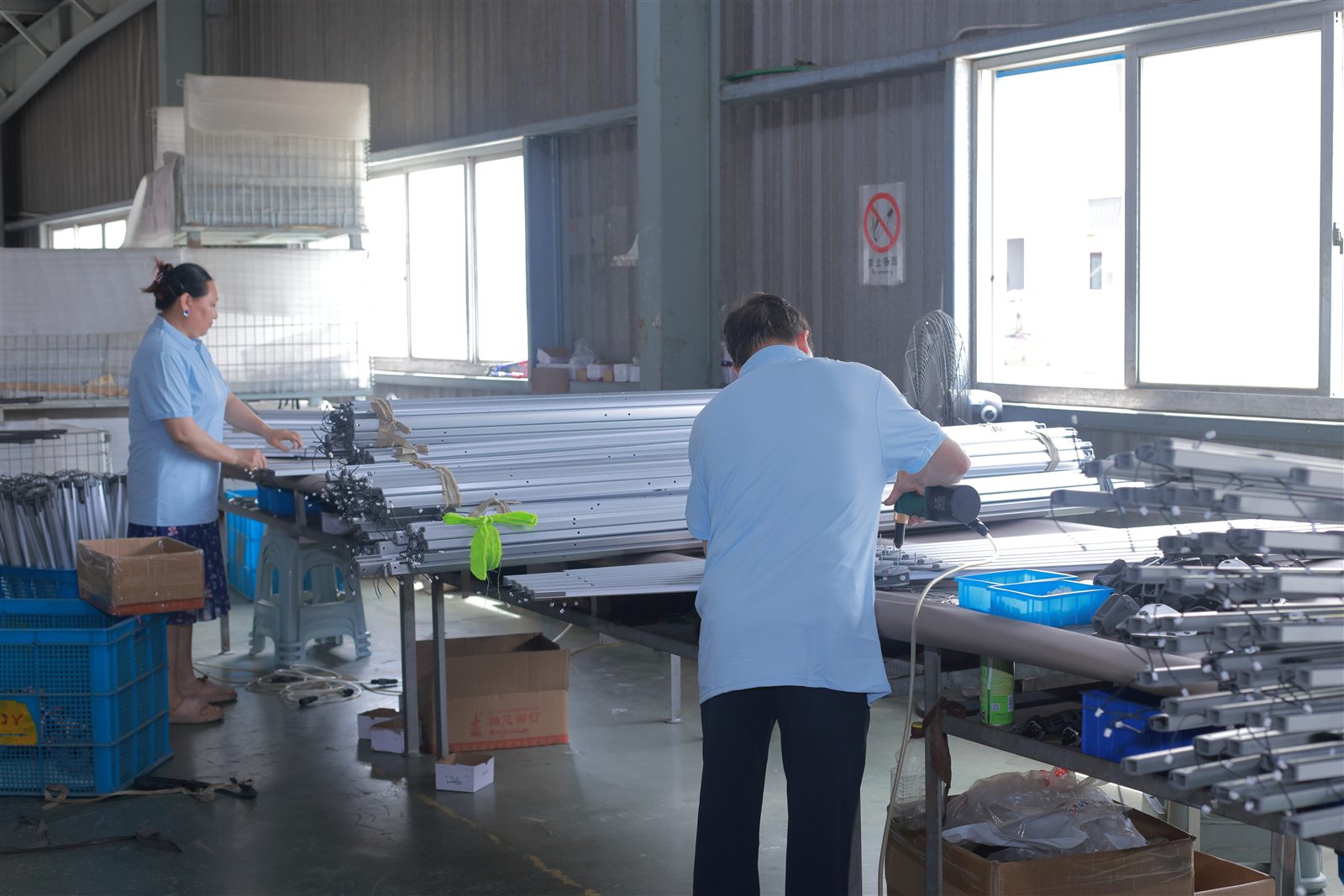
At the factory, assembly is where individually prepared components become one working system. Good results depend on sequence, alignment and verification rather than speed alone.
1. Establishing a stable structural path
The mast, cantilever arm, hub and ribs form a connected load path. If one joint is not seated correctly, the effect may be seen elsewhere as uneven canopy tension, difficult movement or unnecessary play. Technicians assemble the main structure in a controlled sequence so each connection supports the next.
This is especially important on larger commercial models, where the canopy covers a broad area and small alignment errors become more noticeable.
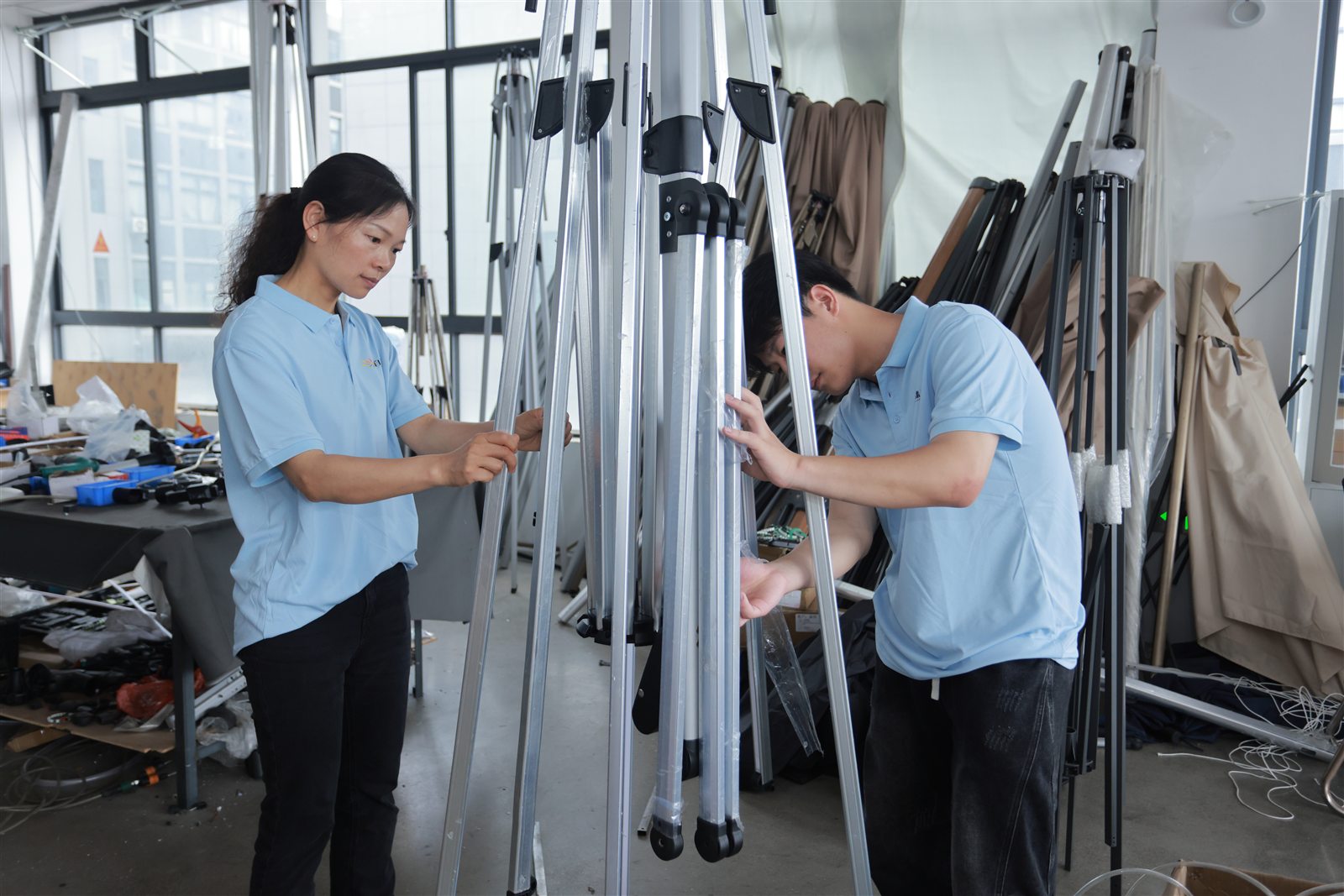
2. Aligning pivots and moving components
Opening systems use pivots, sliders, handles and linkages to control movement. These parts must remain aligned through the full range of operation. Correct positioning reduces friction and helps the user operate the umbrella with a consistent feel.
During assembly, technicians check that moving components travel as intended and that cables or integrated electrical connections are not pinched or placed under avoidable tension.
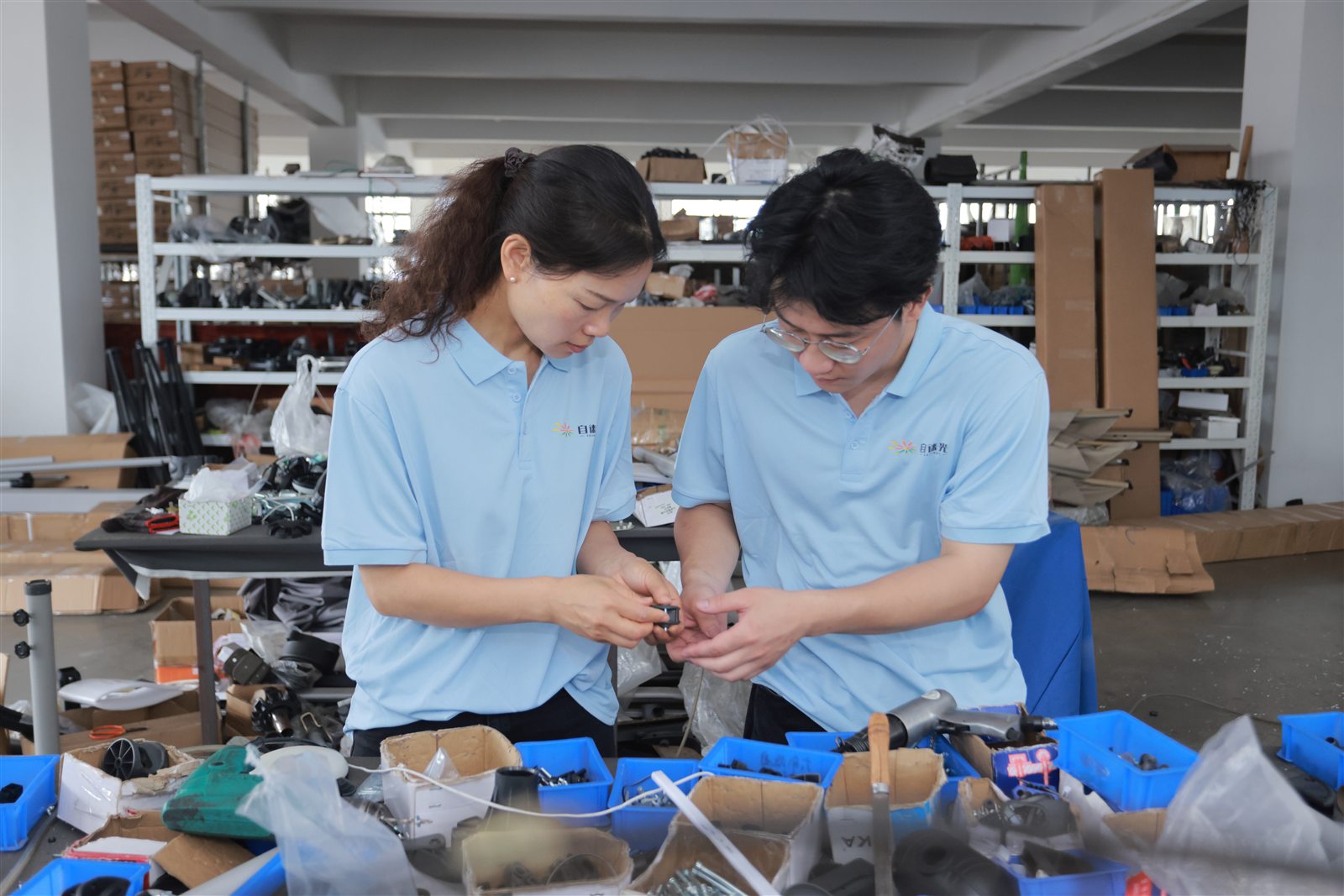
3. Controlling fasteners and connection fit
Fasteners hold the structure together, but reliable assembly is not achieved by tightening every point as much as possible. Different connections have different functions: some are fixed, while others must allow controlled movement. The correct parts, washers and fastening method help maintain both security and operation.
Fit is also reviewed for visible gaps and unnecessary movement. Consistent connection quality is essential for OEM/ODM batches because every unit should deliver the same user experience.

4. Integrating smart components cleanly
For a solar umbrella, structural and electrical assembly cannot be separated completely. Solar modules, lighting, fans, charging outputs and controllers need secure mounting and sensible routing. Components should be accessible for inspection without interfering with the umbrella mechanism.
A coordinated assembly process helps keep the underside organized and protects wiring from moving joints. It also supports easier service if a component needs attention later.
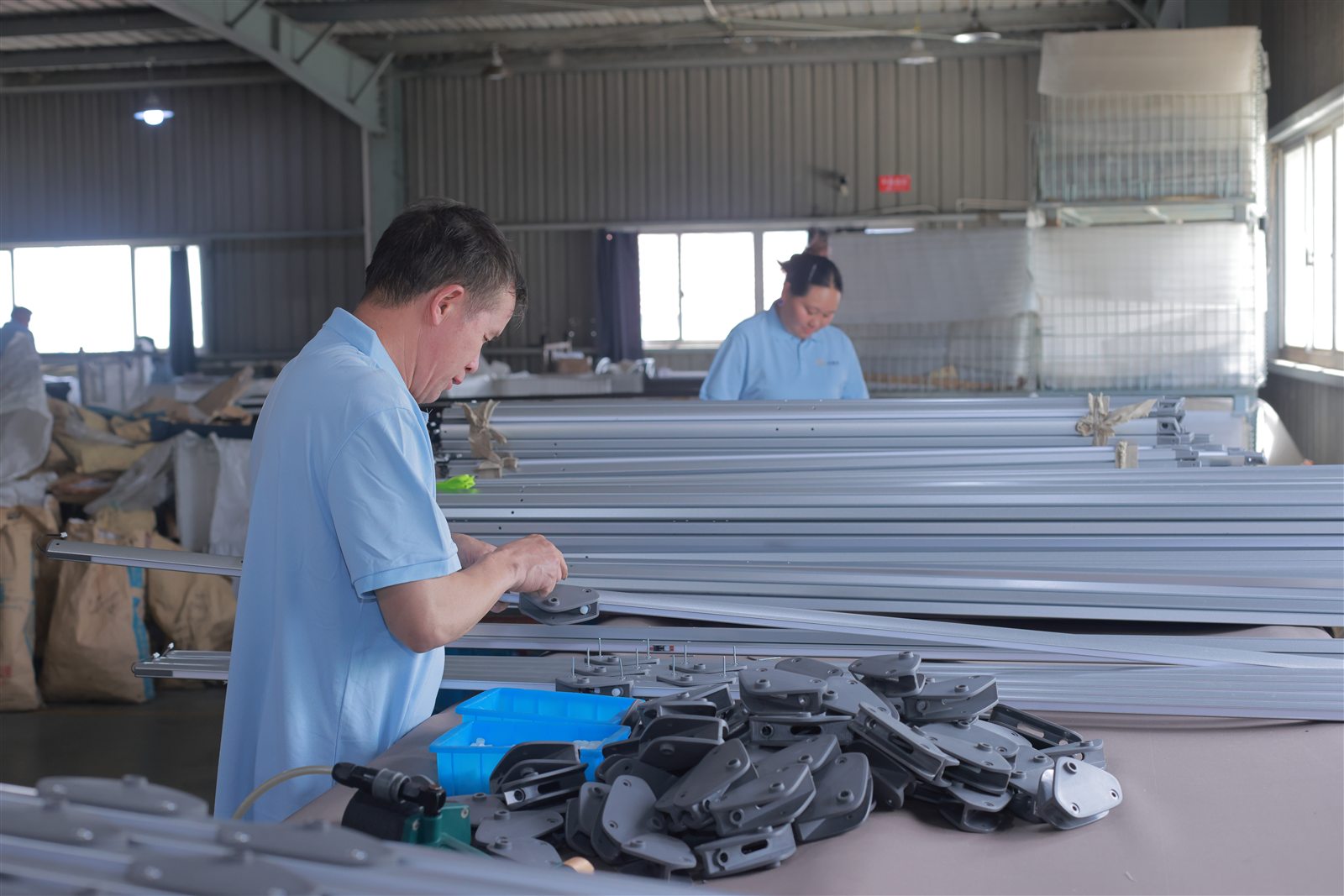
5. Operating the finished umbrella before packing
The most useful assembly check is to operate the finished product. The umbrella is opened, positioned and closed while technicians observe movement, canopy balance and component behavior. A visual check confirms that the frame sits correctly and the canopy presents an even profile.
Operational inspection also gives the team a final opportunity to correct minor adjustments before cleaning and packing. For project customers, this step reduces installation surprises and supports a more consistent rollout across multiple locations.
Accuracy supports a better customer experience
Guests may never see the assembly process, but they notice the result. A commercial umbrella that opens smoothly, looks balanced and keeps its integrated functions organized feels more professional in daily use.
Solargy's factory team combines structural assembly with product-specific function checks. Whether the final destination is a café, resort, villa, park or distributor warehouse, the objective is the same: deliver a system that is ready to work as one complete outdoor product.
Related Articles
 Solar Energy
How Semi-Flexible Solar Panels Power a Smarter Outdoor Umbrella
See how semi-flexible solar panels power a smarter outdoor umbrella, turning sunlight into reliable energy for smarter outdoor comfort.
Read More Factory
One Control Hub, Multiple Functions: A Simpler Way to Operate Smart Solar Umbrellas
Discover how one control hub simplifies operating smart solar umbrellas, combining multiple functions for easier outdoor use.
Read More Solar Energy
From Sunlight to Charging: How Solar Panels and Batteries Power a Smart Solar Umbrella
See how solar panels and batteries work together in a smart solar umbrella, turning sunlight into charging power for outdoor energy use.
Read More
Solar Energy
From Sunlight to Evening Comfort: How a Solar Umbrella Manages Energy
See how a solar umbrella manages energy from sunlight to evening comfort, using semi-flexible solar panels and smart power control for outdoor use.
Read More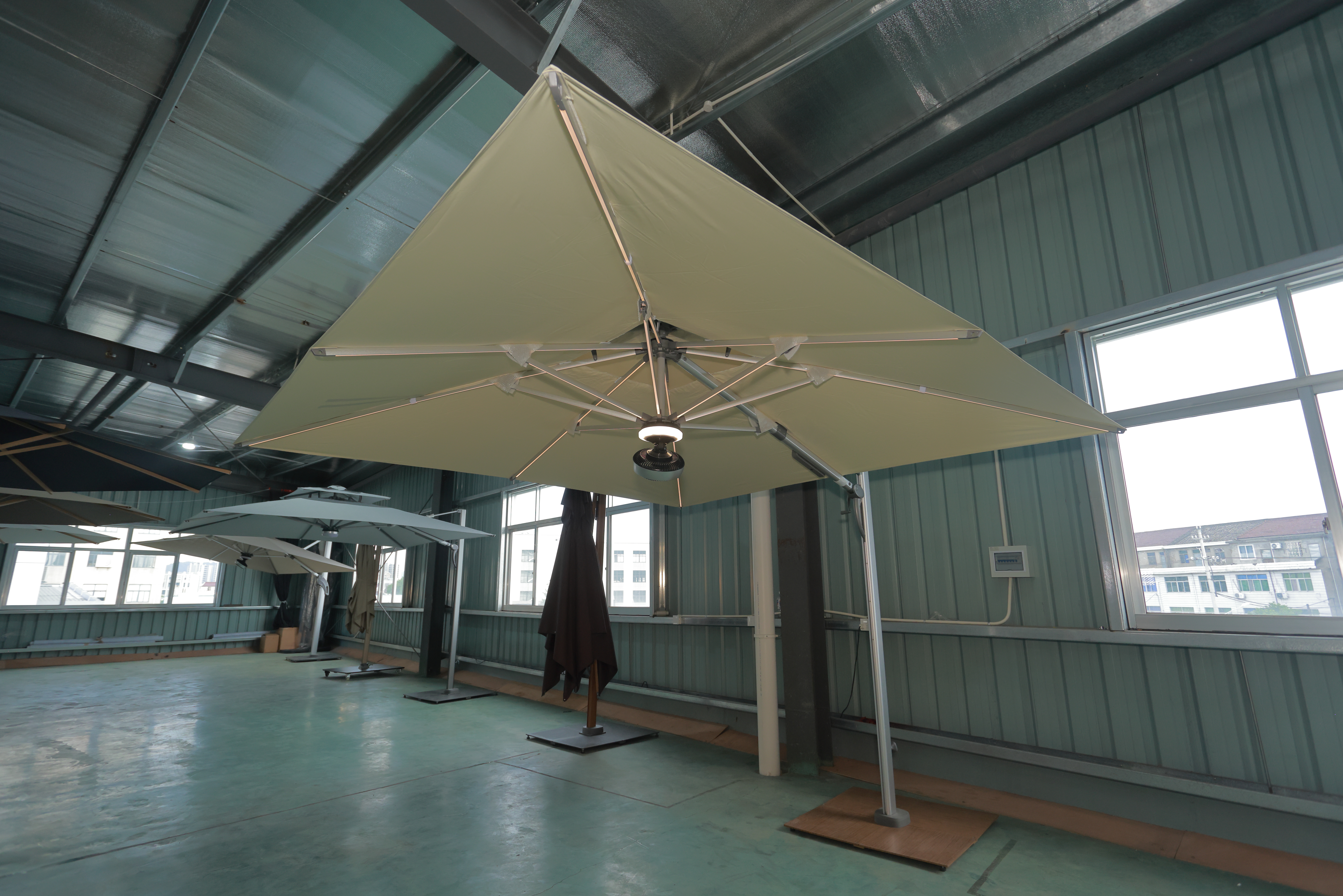 Solar Energy
20W vs 40W Solar Umbrellas: How to Choose the Right Power Configuration
Compare 20W and 40W solar umbrella systems by energy demand, battery capacity and nightly runtime to choose the right setup for each outdoor application.
Read More Applications
How to Install a Cantilever Solar Umbrella for a Stable, Guest-Ready Patio
Learn how to install a cantilever solar umbrella for a stable, guest-ready patio, with practical setup guidance for reliable outdoor use.
Read More