

News & Insights
In-depth articles, product stories, and thought leadership from Solargy.
From Sunlight to Evening Comfort: How a Solar Umbrella Manages Energy
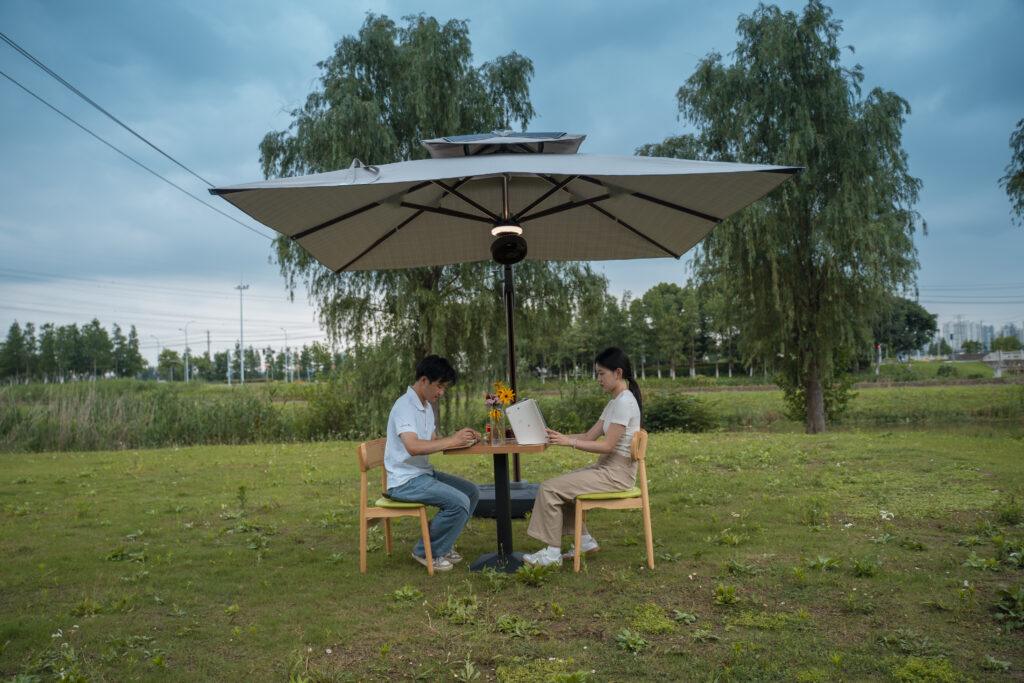
A smart solar umbrella is more than a shade structure with a solar panel attached. It is a compact energy system that collects sunlight, stores electricity and distributes power to the functions people use beneath the canopy. When these parts are matched correctly, one outdoor product can support shade by day and useful comfort after sunset.
Understanding the energy path helps commercial buyers compare configurations more clearly. Panel wattage matters, but reliable performance also depends on charging control, battery capacity, operating habits and the combined power demand of lighting, airflow, charging ports and audio features.
The energy path in four steps
1. Capture sunlight above the canopy
A semi-flexible photovoltaic module follows the form of the umbrella more naturally than a rigid glass panel. Its low weight helps preserve normal opening and positioning, while the exposed location above the canopy gives the module access to daylight. The module converts available sunlight into direct-current electricity whenever conditions allow.
2. Regulate the charging process
The solar module does not connect directly to every device. A controller manages the flow of electricity between the panel, battery and output functions. This helps keep charging stable, coordinates the available power and protects the system from avoidable electrical stress.
3. Store energy for later use
Outdoor spaces often need their most visible functions when sunlight is weak or no longer available. An integrated battery stores part of the energy collected during the day so lighting, a fan or other configured features can continue operating in the evening. Storage turns intermittent sunlight into energy that can be used on demand.
4. Deliver power to the selected functions
The stored energy is distributed to the umbrella's configured loads. Depending on the model, these may include LED lighting, an airflow fan, Bluetooth audio and USB charging. A coordinated system keeps wiring organized beneath the canopy and reduces dependence on extension cables across a patio.
Why system balance matters
A larger solar panel is not automatically the best answer for every project. The panel, battery and electrical loads need to be considered as one system. If daily energy collection is much lower than the planned use, the battery may not recover fully. If the system is oversized for a light-duty application, the project may carry unnecessary cost and weight.
The best configuration starts with the intended experience. A café may prioritize evening ambient lighting and occasional phone charging. A resort lounge may need airflow for several hours during hot periods. A villa or park installation may use fewer functions but operate in a location where permanent wiring is inconvenient.
What affects real-world solar performance?
- Sun exposure: open placement generally provides better charging than a position shaded by trees, buildings or another canopy.
- Season and weather: shorter winter days, heavy cloud cover and repeated rainy periods reduce the energy available for storage.
- Operating time: running a fan for several hours uses more energy than short periods of ambient lighting.
- Load priority: deciding which functions are essential makes daily energy use easier to manage.
- Maintenance: keeping the photovoltaic surface clean helps prevent dust and debris from reducing light collection.
Daytime collection creates evening value
The practical value of solar energy is not limited to electricity savings. A self-powered umbrella can help an outdoor area remain comfortable and attractive for longer. During the day it provides shade and can support airflow. As daylight fades, integrated lighting can define the seating area without introducing loose cables or a separate lamp installation.
For cafés, hotels, resorts and event spaces, that transition can extend the usable hours of a terrace. Guests can continue dining, talking or working outdoors in a space that feels intentionally designed from afternoon into evening.
Questions to ask before selecting a configuration
- How many hours per day will each electrical function be used?
- Will the umbrella receive direct sunlight at its planned location?
- Is the main goal lighting, cooling airflow, charging, entertainment or a combination?
- Does the project require regular operation after sunset?
- How easy should component access and future replacement be?
Clear answers allow the panel output, battery storage and device load to be matched to the project instead of choosing specifications in isolation.
A practical approach to solar-powered outdoor comfort
A well-designed solar umbrella manages energy quietly in the background. Guests experience shade, light, airflow and convenient power without needing to understand the system behind them. For owners and operators, the result is a cleaner installation, flexible placement and a more useful outdoor environment.
Solargy develops smart solar umbrella configurations for different canopy sizes, operating patterns and commercial applications. Contact our team to discuss the energy functions, battery capacity and photovoltaic configuration that best fit your site.
Related Articles
 Factory
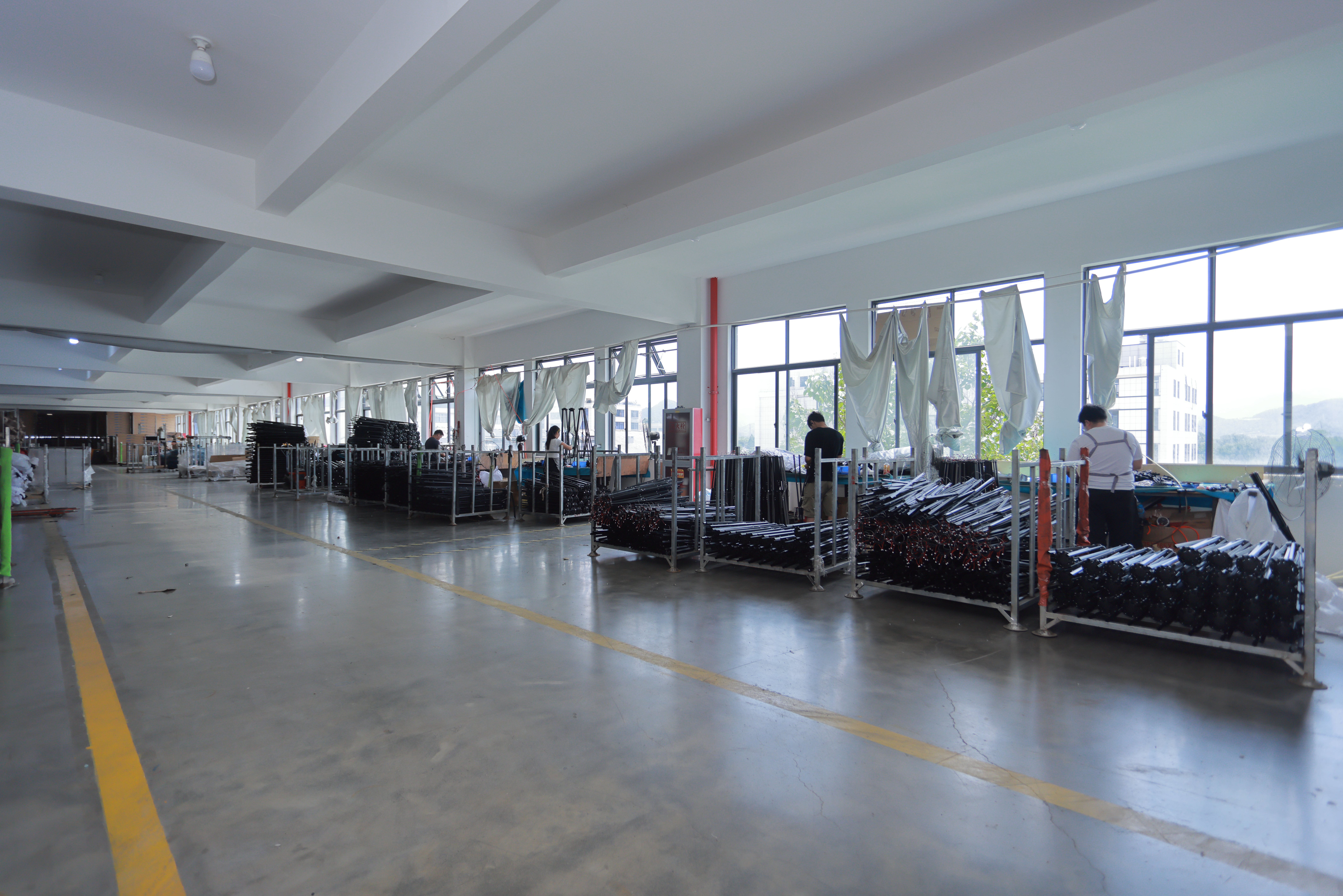
Inside Solargy’s Production Process: From Components to Final Testing
Follow every solar umbrella from component to final testing as Solargy's factory details its quality control steps and manufacturing process.
Read More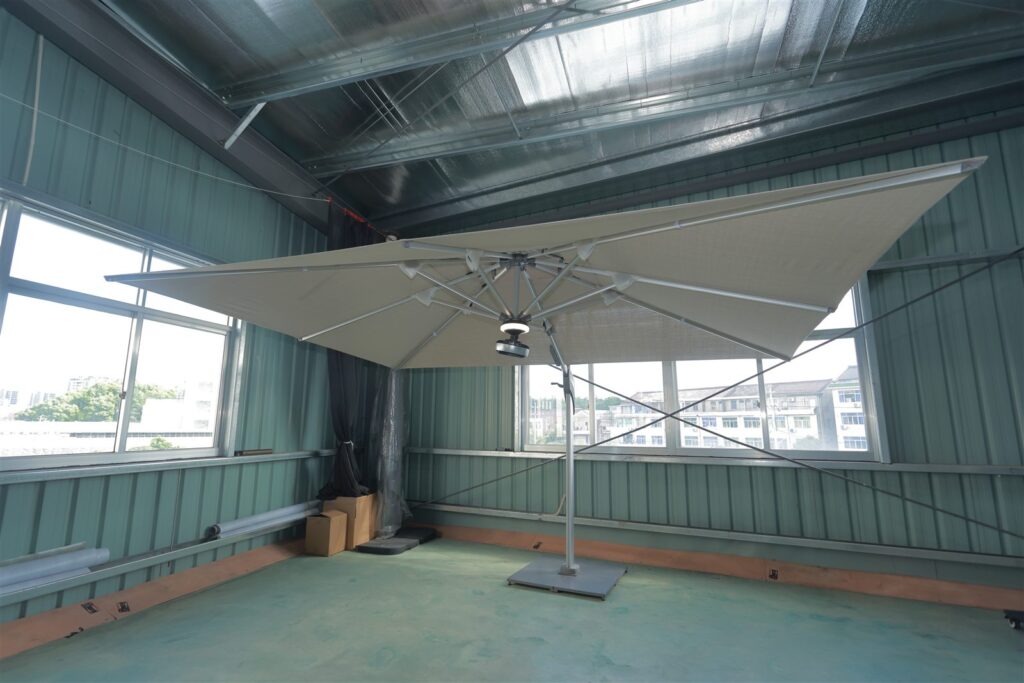 Factory
What We Test Before a Smart Solar Umbrella Leaves the Factory
See the checks a smart solar umbrella undergoes before leaving the factory, from components to final testing, ensuring reliable outdoor performance.
Read More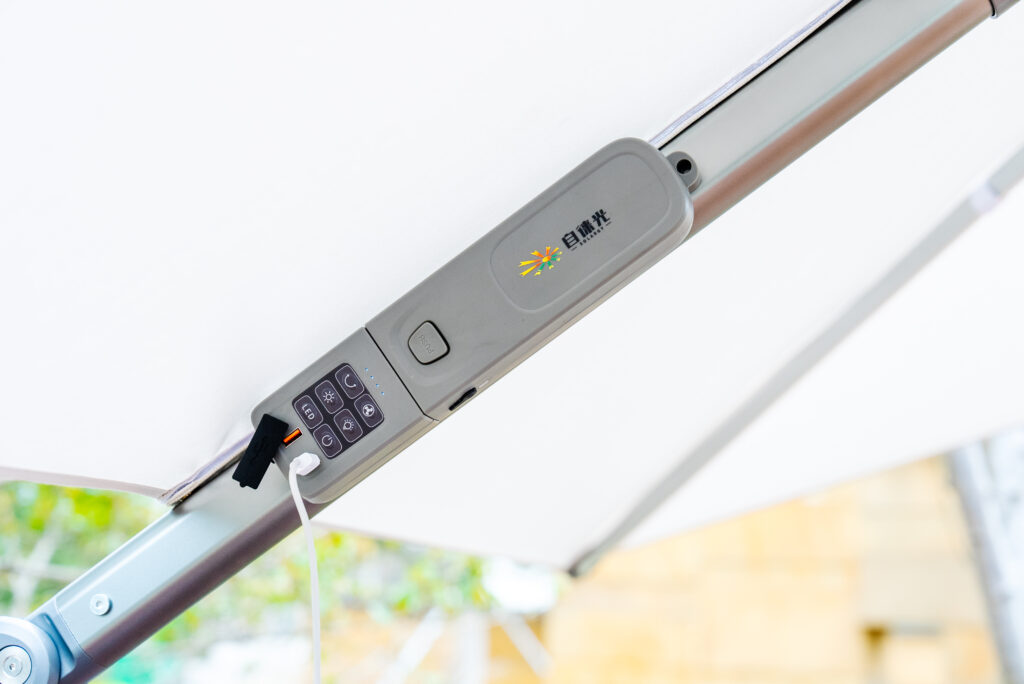 Factory
One Control Hub, Multiple Functions: A Simpler Way to Operate Smart Solar Umbrellas
Discover how one control hub simplifies operating smart solar umbrellas, combining multiple functions for easier outdoor use.
Read More Applications
What Guests Actually Notice Under a Smart Solar Umbrella
See what guests actually notice under a smart solar umbrella and how thoughtful design shapes comfort, shade and the outdoor experience.
Read More
Solar Energy
How Semi-Flexible Solar Panels Power a Smarter Outdoor Umbrella
See how semi-flexible solar panels power a smarter outdoor umbrella, turning sunlight into reliable energy for smarter outdoor comfort.
Read More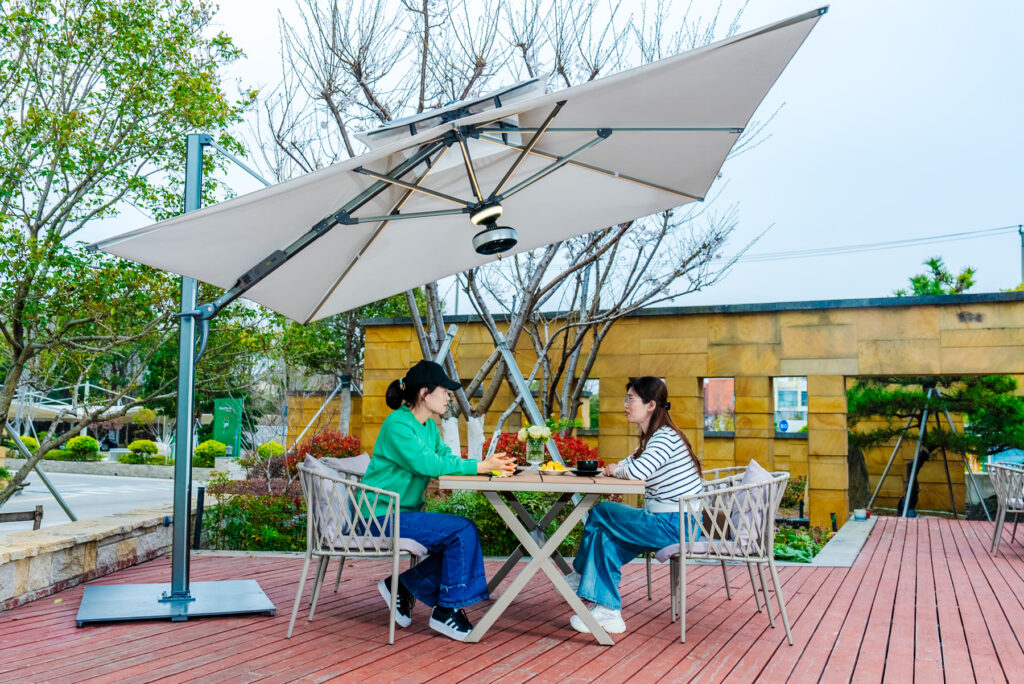 Applications
More Than Shade: How Solar Umbrellas Increase Guest Dwell Time and Commercial Value
See how solar umbrellas add shade, airflow, lighting and charging to commercial patios, helping cafés, resorts and villas extend guest dwell time.
Read More